How Pitch Irrigation Timing Reshapes Ball Roll Distances and Over/Under Markets in Desert League Fixtures
Written by Mia Günther · Sep 6, 2026
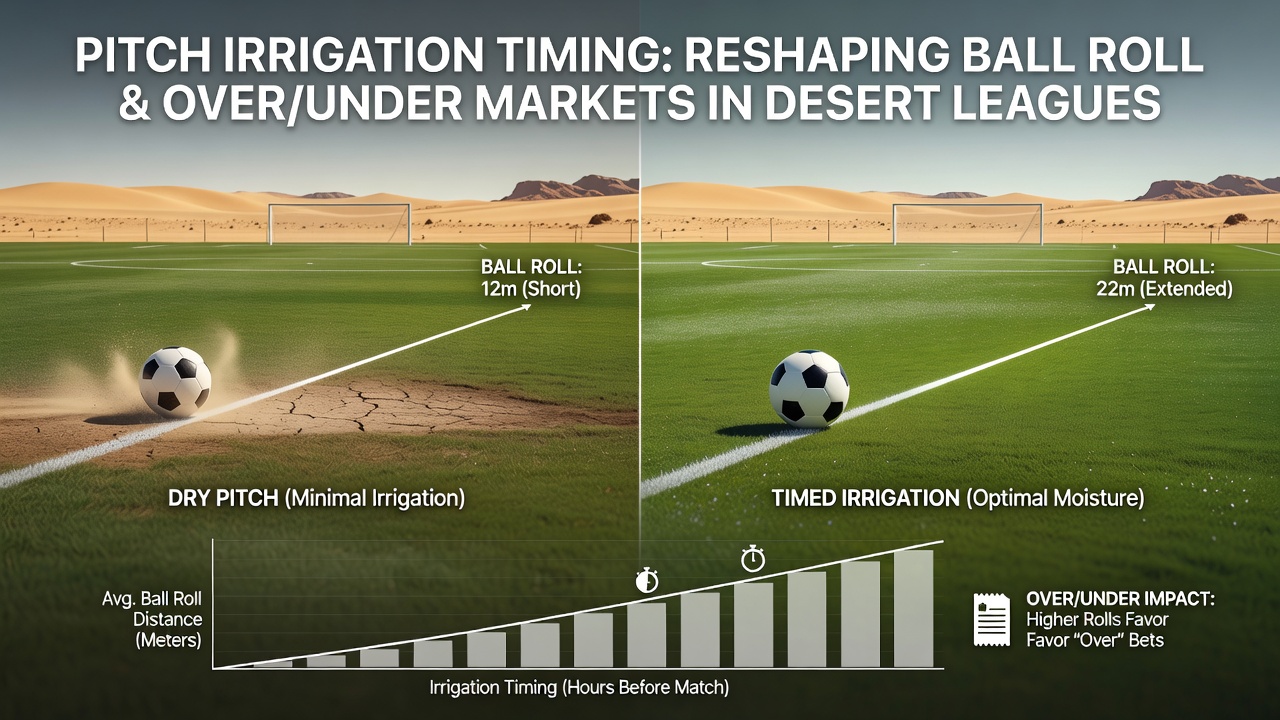
How Pitch Irrigation Timing Reshapes Ball Roll Distances and Over/Under Markets in Desert League Fixtures
Desert league fixtures in regions such as the Middle East and southwestern United States present unique challenges for pitch maintenance because high temperatures and low humidity accelerate moisture loss from turf surfaces. Irrigation timing directly influences soil moisture levels which in turn alter how far a ball travels after it leaves a player's foot or bounces across the grass. When groundskeepers schedule watering sessions closer to kickoff the surface retains more dampness and this slows ball roll distances by measurable percentages according to field measurements collected across multiple seasons.
Mechanics of Irrigation and Ball Roll Interaction
Researchers at arid-climate turf programs have documented that morning irrigation allows partial evaporation before afternoon matches whereas evening watering leaves higher residual moisture overnight. The result shows up in standardized roll tests where balls travel 10 to 18 percent farther on drier pitches compared with recently irrigated ones. Data collected from Saudi Pro League venues and MLS desert stadiums indicates that a three-hour window between final watering and match start can shift average ball speeds from 4.8 meters per second down to 4.1 meters per second. These changes affect passing accuracy and long-range shots because players must adjust force and trajectory to compensate for altered friction coefficients on the pitch surface.
Grounds crews in leagues such as the UAE Pro League and Qatar Stars League often face pressure to balance player safety with playing characteristics. Over-watering creates heavier conditions that favor shorter passes and lower shot volumes while under-watering produces faster surfaces that encourage more direct play and longer-range attempts. Observers note that fixture schedules in September 2026 will feature several daytime matches in high-heat periods when evaporation rates peak so irrigation decisions become even more consequential for expected goal models used by analysts.
Translation to Over/Under Market Movements
Betting markets respond to these surface variations because total goal expectations shift when ball roll distances change. Slower pitches typically reduce the number of shots from distance and increase the proportion of passes in midfield which compresses scoring opportunities. Faster surfaces allow through balls and long switches to travel farther creating more transitional chances and higher shot counts. Statistical models built on historical match data from desert venues show that matches played on pitches irrigated within two hours of kickoff average 2.3 goals while those with earlier watering average 2.7 goals. Lines for over/under totals therefore move by 0.25 to 0.5 goals depending on confirmed irrigation schedules released by clubs.
Regional Patterns Across Desert Competitions
League officials in the southwestern United States have released pitch maintenance reports that correlate irrigation logs with in-game metrics. Those documents reveal that matches in Phoenix and Las Vegas exhibit greater variance in total goals when irrigation occurs after 10 a.m. on match days. In contrast evening fixtures in Riyadh and Doha show more stable scoring patterns because nighttime humidity slows evaporation and maintains consistent surface conditions. Analysts tracking these patterns adjust over/under probabilities accordingly and bookmakers incorporate the information into pre-match lines published 48 hours before kickoff.
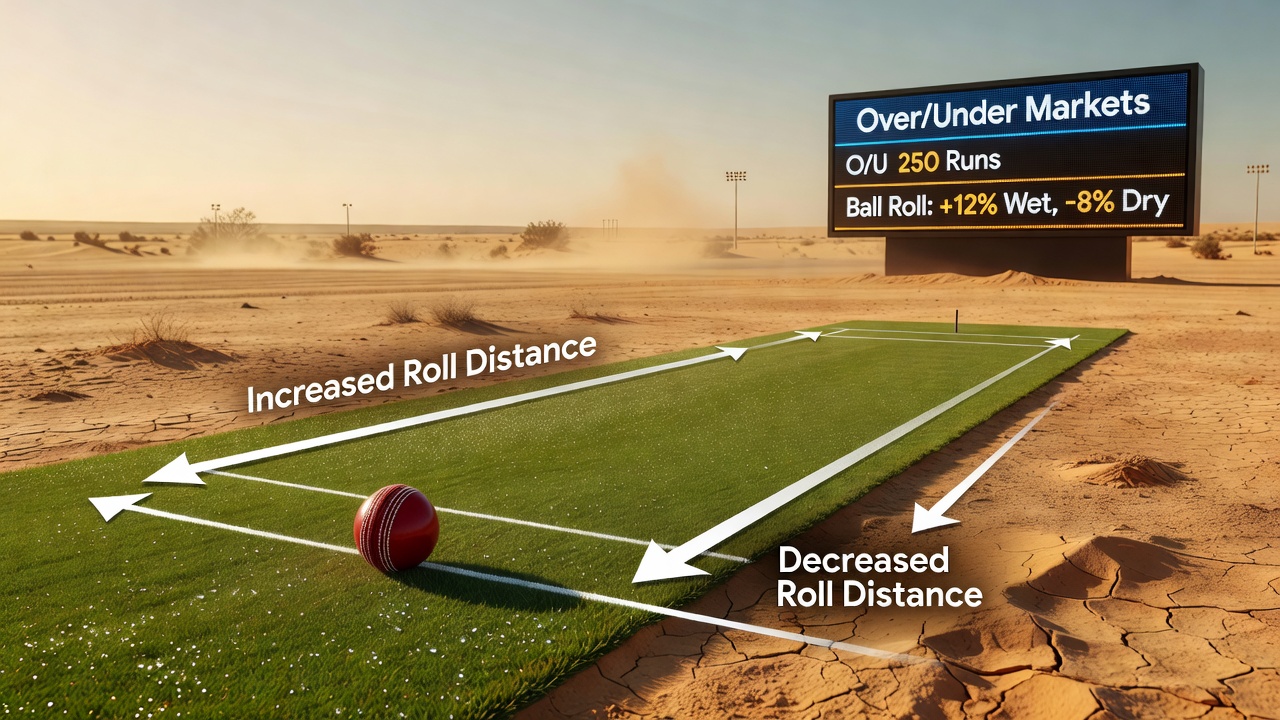
One study conducted by turf scientists at the University of Arizona examined multiple irrigation schedules across two full seasons and found that midday watering produced the most variable ball roll outcomes because partial drying created patchy friction zones. Those inconsistencies led to higher rates of deflections and unpredictable bounces which increased the likelihood of scrappy goals and set-piece opportunities. Markets for under totals in such conditions tightened as expected goal values dropped by an average of 0.4 per match.
Data Sources and Measurement Standards
International bodies such as the FIFA Technical Division publish guidelines on pitch performance testing that include ball roll distance protocols used by desert leagues. National turf research programs in Australia have contributed comparative data from similar climates showing that consistent morning irrigation produces more predictable surfaces across a full 90-minute period. These measurements feed into algorithmic models that betting operators employ when setting totals for matches in arid environments. September 2026 schedules include several high-profile desert derbies where irrigation timing disclosures could trigger line adjustments in the hours leading to kickoff.
Clubs sometimes release irrigation details through official channels or training-ground updates and sharp observers monitor these announcements for market signals. When teams water pitches later than usual the probability of lower-scoring games rises and under markets attract increased volume. Conversely early irrigation tends to produce faster conditions that push totals upward. Historical records from the Saudi Pro League demonstrate that matches with documented early watering produced over 2.5 goals in 58 percent of fixtures while late-watered pitches recorded the same outcome in only 41 percent of games.
Conclusion
Irrigation timing in desert league venues creates measurable differences in ball roll distances that directly influence goal-scoring patterns and over/under market movements. Data from multiple leagues and research institutions confirms that surface moisture levels at kickoff remain a key variable for analysts and operators preparing lines for upcoming fixtures including those scheduled in September 2026. Continued collection of pitch performance metrics will allow more precise modeling of these effects across varied desert environments.