Dismissal Dynamics: How Early Red Cards Cascade Through Goal Markets in Soccer Leagues with Varying Tactical Styles
Written by Eden Perry · Sep 20, 2026
Dismissal Dynamics: How Early Red Cards Cascade Through Goal Markets in Soccer Leagues with Varying Tactical Styles
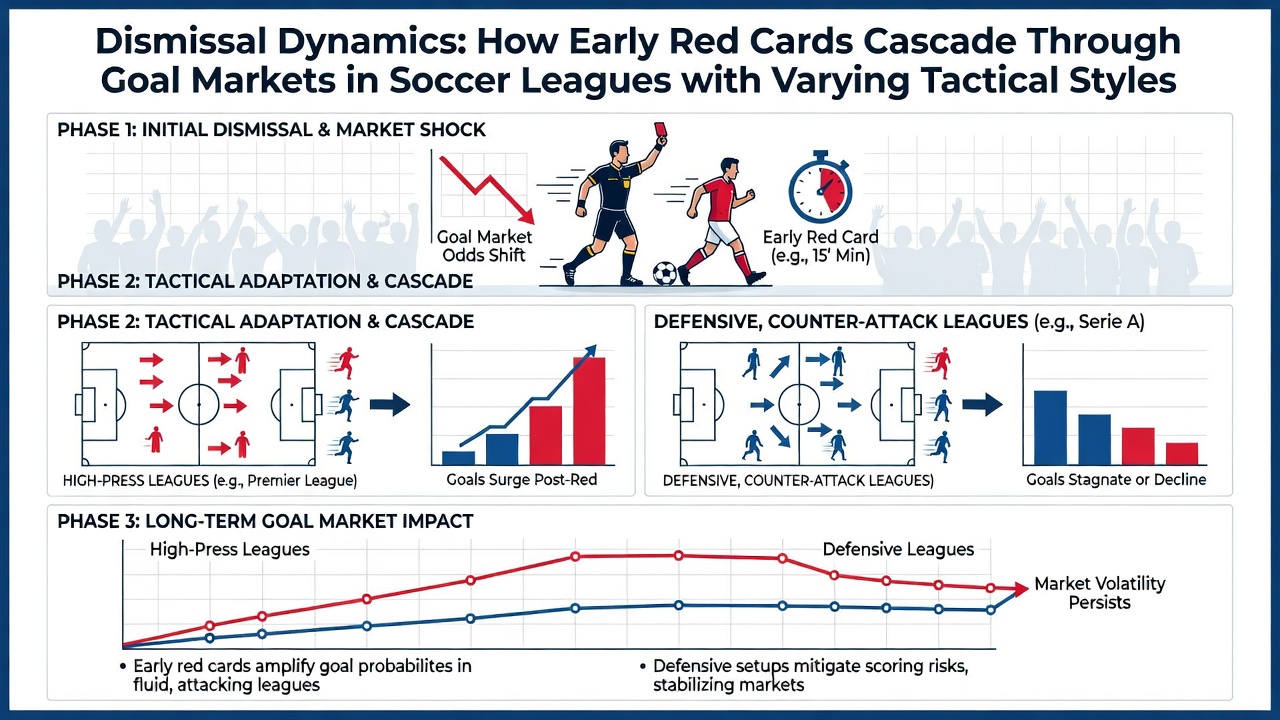
Early dismissals in soccer matches trigger immediate tactical realignments that ripple through goal markets, and data from major European leagues shows distinct patterns depending on the dominant styles in each competition. Researchers tracking fixtures since the 2024-2025 campaign note that a red card before the 30-minute mark typically elevates expected goals for the reduced team in possession-oriented leagues, while defensive setups in other competitions absorb the pressure differently and limit total goals.
League-Specific Responses to Numerical Disadvantage
English Premier League sides, which favor high-pressing systems, see over 2.5 goal markets activate more frequently after early send-offs because the trailing team pushes forward aggressively, according to aggregated match data. In contrast, Italian Serie A teams often drop deeper into compact blocks, which compresses space and keeps goal tallies lower even when a player is dismissed, as observers tracking these fixtures have documented across multiple seasons. Bundesliga matches with early red cards produce wider scoring margins on average because open, transitional play accelerates once one side loses a defender, and figures from domestic tracking services confirm this trend holds through September 2026.
Tactical Adjustments and Their Market Effects
Coaches respond to early dismissals by shifting formations within minutes, and these changes directly influence live goal lines. Possession-dominant teams such as those in La Liga often maintain shape longer, which sustains build-up play and creates sustained pressure that pushes over markets higher, whereas direct counter-attacking outfits in the Portuguese Primeira Liga sacrifice control and concede more shots once reduced to ten players. Analysts examining video and event data note that substitutions for defensive reinforcements occur faster in leagues where set-piece defending ranks as a core strength, which in turn caps the number of open-play goals and stabilizes under markets.
Data Patterns Across Competitions
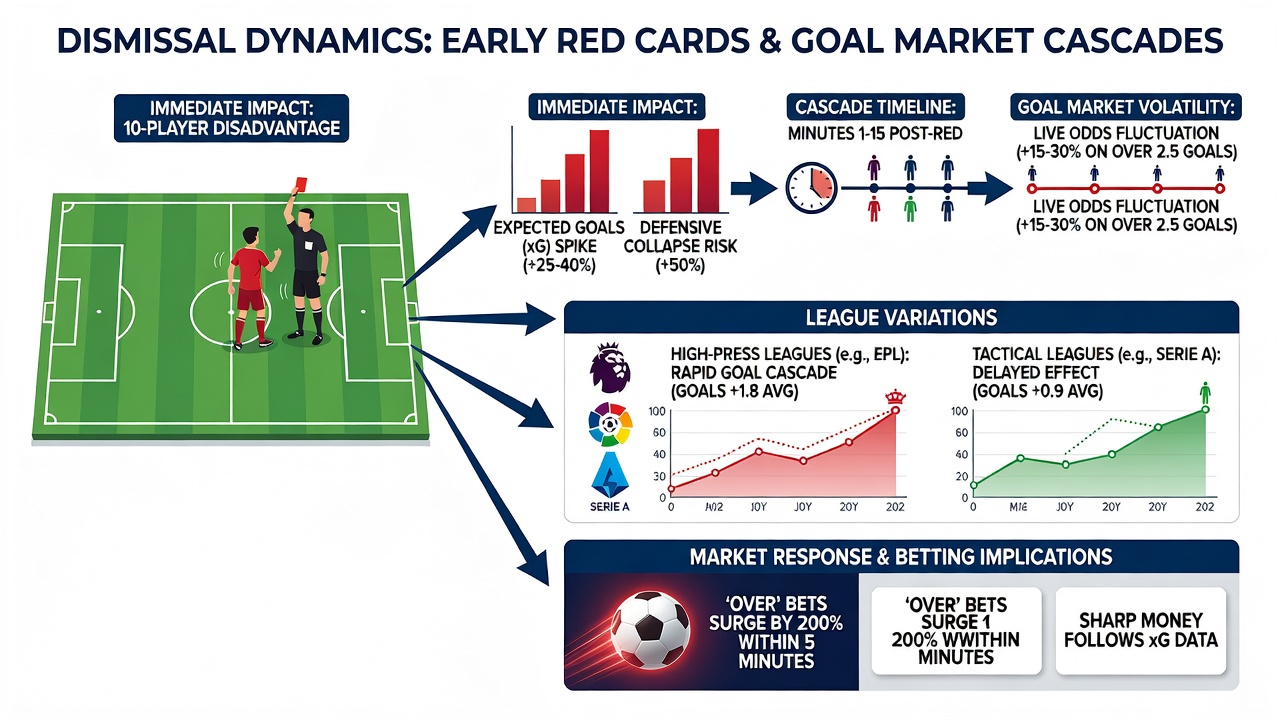
Comprehensive reviews of matches from 2023 onward reveal that early red cards increase average goals per game by 0.8 in the Bundesliga yet only by 0.3 in Ligue 1, where cautious approaches persist even after numerical deficits. These differences stem from baseline tactical philosophies rather than random variance, and season-long statistics illustrate how the same event produces divergent outcomes once league context enters the equation. Match reports from September 2026 continue to show the same divergence, with high-pressing leagues registering sharper spikes in second-half goal tallies following dismissals.
Goalkeepers and backlines adjust positioning once a teammate departs, and this shift alters shot locations in measurable ways. Leagues that emphasize width and overlapping fullbacks experience more central opportunities after red cards because the remaining defenders spread thinner, while narrow defensive blocks common in certain Eastern European competitions funnel attacks into congested areas and reduce conversion rates. Tracking providers record these spatial changes consistently, allowing market models to adjust totals based on league identity rather than applying uniform corrections.
Substitution Timing and Goal Flow
Managers time their bench responses differently across tactical cultures, and the timing influences whether goal markets settle early or continue climbing. In leagues where attacking depth sits on the bench, coaches introduce forwards quickly after early dismissals to chase an equalizer, which stretches games and elevates totals. Defensive-minded competitions see earlier defensive reinforcements that stabilize proceedings and keep goal counts closer to pre-match expectations, as event logs from tracked fixtures demonstrate across multiple campaigns.
Market Implications and Live Adjustments
Betting lines on goal totals respond to these cascades within minutes of a red card, yet the magnitude of movement varies by league profile. Possession-heavy competitions witness larger swings toward higher totals because reduced sides maintain territorial dominance, whereas counter-focused leagues see smaller adjustments since the numerical disadvantage often leads to more direct but lower-volume attacks. Industry reports from organizations such as UEFA technical departments highlight how these patterns persist across age-group and senior levels, giving analysts repeatable frameworks for interpreting live markets.
Weather and pitch conditions interact with these dynamics in secondary ways, though the primary driver remains the tactical response to the dismissal itself. September 2026 fixtures continue to underscore that early red cards do not produce uniform effects; instead, the surrounding league style determines whether goal markets expand, contract, or remain relatively stable once the numerical imbalance takes hold.
Conclusion
Early red cards therefore cascade through goal markets according to the tactical DNA of each league, with data revealing clear separations between high-pressing, possession-based, and defensively compact approaches. Observers monitoring these patterns across European competitions note that the same event produces measurably different outcomes once league context and substitution habits enter the analysis. These documented differences allow precise calibration of market expectations rather than blanket assumptions about increased scoring after dismissals.